At Ethos Health, we take a modern, evidence-based approach to supporting people with osteoarthritis.
Our focus is on helping you stay active, reduce pain, and regain control through personalised care that looks at the whole picture, not just the joint itself. Whether your symptoms are recent or long-standing, our team is here to guide you with practical, effective strategies that fit into your daily life.
Nick is an experienced physiotherapist with over 12 years in musculoskeletal care, specialising in knee and hip osteoarthritis, low back pain, and related disorders. He combines evidence-based treatment with an individualised approach and is currently completing his PhD.
Osteoarthritis (OA) is a musculoskeletal condition that affects joints. Traditionally, it has been viewed as a ‘wear and tear’ disease, OA is now recognised that it can impact the bone, cartilage, ligaments, and muscles. Most commonly, OA occurs in the knees, hips, and thumbs. OA can cause joint pain and loss of function. However, it is important to understand that the pain and dysfunction associated with OA can be managed effectively with conservative treatment including exercise, education, and weight loss if required.
What causes osteoarthritis?
OA is no longer viewed as a ‘wear and tear’ disease. Our understanding of OA has changed and it is now considered a ‘whole person condition’ often with multiple different causes or contributing factors. There are certain risk factors that increase your likelihood of developing OA, or the pain and dysfunction associated with OA. However, many of these risk factors are modifiable and can be changed with early identification and appropriate management. For example, a high BMI or muscle weakness. Every person is different, so it is important to understand your risk factors so that they can be treated directly.
How is osteoarthritis treated?
Treatment for OA is currently underpinned by a stepped model of care. This ranges from conservative management at the bottom, to surgery at the top. It is recommended that everyone should start with conservative management. Conservative management should include education, exercise, and weight loss where appropriate. This management is usually delivered by an allied health professional such as a physiotherapist, dietitian, or exercise physiologist. However, understanding your risk factors will also help to make treatment for specific to you.
How can osteoarthritis be prevented?
OA, or the pain and dysfunction associated with OA, can be prevented by understanding your personal risk factors. Risk factors are those things that increase your likelihood of developing a disease or condition such as OA. Some risk factors are considered modifiable, which means they can be changed to lower your risk. For OA modifiable risk factors can include being over-weight, muscle weakness, or general health considerations. If you can identify your modifiable risk factors, you can reduce your risk by starting management of these factors.
How is osteoarthritis diagnosed?
The diagnosis of OA should be made clinically, and solely relying on an x-ray is no longer required. A clinical diagnosis of OA is made on the basis of symptoms (including pain, stiffness, and functional limitation), and physical examination (including crepitus, restricted movement, and joint tenderness). Solely relying on an x-ray is no longer recommended due to the poor correlation between imaging findings and symptoms.
How can physiotherapy help with osteoarthritis?
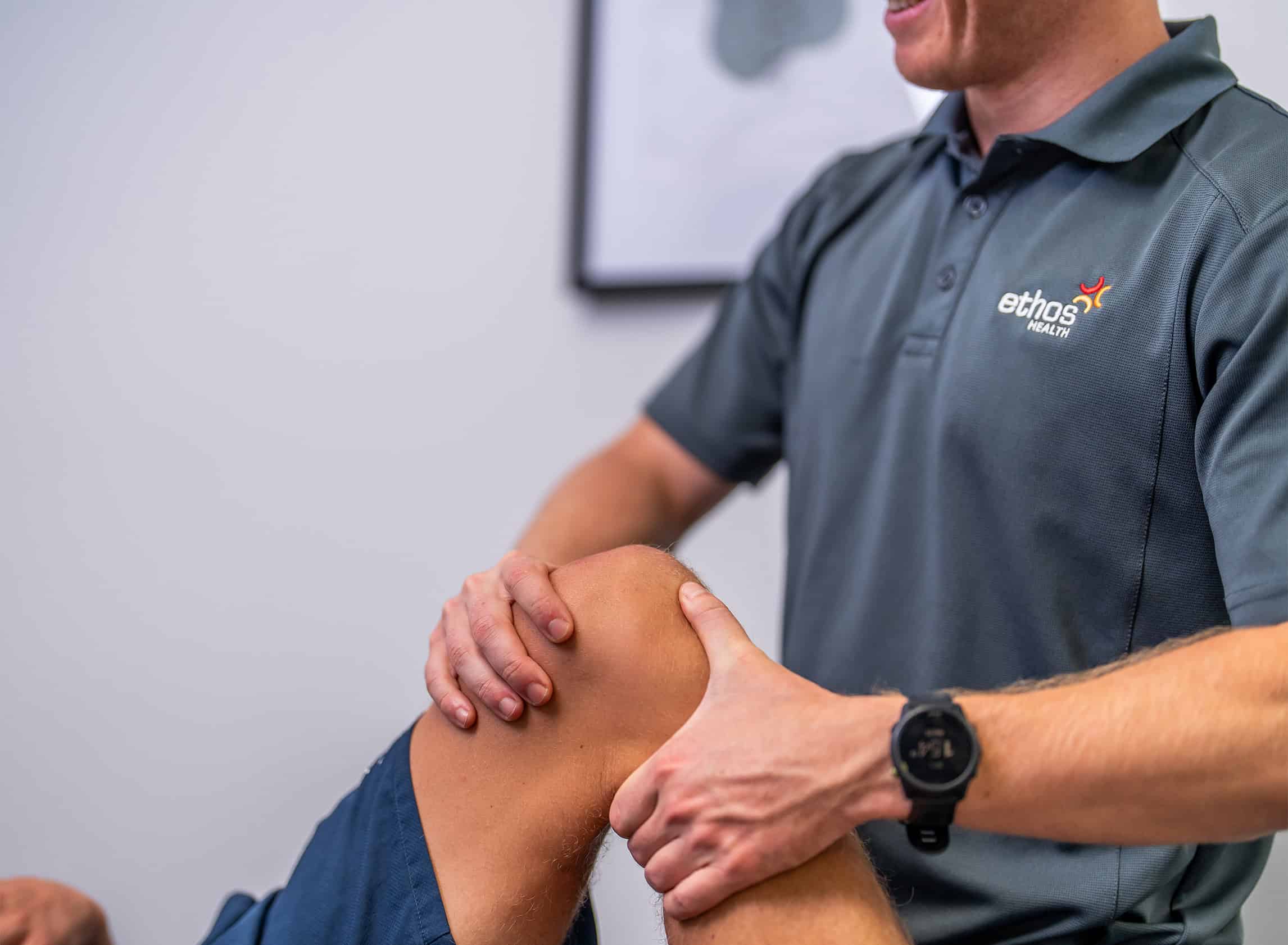
Physiotherapy can help with OA in several ways. Firstly, physiotherapists can play a vital role in assessing your risk factors. If your physiotherapist identifies any modifiable risk factors they can initiate treatment. For example, if your physiotherapist identifies any muscle weakness, they can provide you with exercises to strengthen those muscles and reduce your risk. Physiotherapists can also help you with your OA no matter whether you are managing it conservatively, preparing you for surgery, or for your rehabilitation after surgery. This is usually done through a combination of education, load management, exercise prescription, and manual therapy as needed.
Ethos Health Hip and Knee Osteoarthritis Preventative Program
Ethos Health has partnered with nib to offer a preventative hip and knee osteoarthritis program funded through your Extras benefits. This program is for people who may be at risk of developing hip or knee osteoarthritis and aims to identify people who may have these modifiable risk factors so that treatment can start as early as possible.